

I’m always warning you about the dangers of “sitting disease.”
But it bears repeating—because many Americans sit for 8 hours daily, if not longer.
And the consequences are anything but minor…
A sedentary lifestyle takes a serious toll on your body—raising your risk of heart disease, Type 2 diabetes, and even some cancers.
But there’s another, lesser-known consequence: It starves your muscles… and that could shorten your life.
You might think mobility issues begin with a bum knee or bad hip. But more often, they start in your muscles.
That’s why preserving muscle mass is one of the most important things you can do to stay healthy and independent well into your 60s, 70s, 80s, and beyond.
And the research proves it…
In a massive 2024 study that tracked nearly half a million people over 12 years, researchers found that sitting most of the day at work increased early death risk by 16 percent.
Another study found that drastically reducing daily step counts slashed the body’s muscle-building ability by 27 percent.
But here’s the kicker: It’s not just about how much you move to counteract that risk—it’s about when you move.
Yet another study showed that prolonged sitting after a meal interferes with amino acid utilization—your body’s ability to use dietary protein to build muscle. (Remember my book, The A-List Diet? The “A” stands for amino acids—for good reason.)
So, if nothing else, make sure you move after meals. It’s one of the smartest and simplest ways to protect your muscles from starvation—and your life.
How to fight back
Why does movement matter so much to muscle preservation?
Because it promotes muscle contractions, which pull blood sugar into your cells, improve circulation, and rev up your metabolism.
Of course, you don’t need to run marathons or start a grueling gym routine. You just need what researchers now call “activity snacks.”
Short, frequent bursts of movement—like 15 squats or a two-minute walk every 30 minutes—were shown to improve muscle protein synthesis and blood sugar control.
Squats are particularly beneficial. But if squats aren’t your thing, try lunges, jumping jacks, or even a quick dance break in your kitchen. It’s about waking up the muscles that go dormant when you’re lounging.
(Learn more ways to incorporate these “snacks” into your daily routine by clicking here.)
And let’s not forget protein. Research shows higher protein intake leads to more muscle, less fat, and better strength—especially as you age. One study even linked higher protein intake with a lower risk of death!
In other words? Eat enough protein—and be sure to break up your sitting time. Treat movement like medicine—and take your daily dose.
Sources:
“What happens to the body after sitting down for too long?” MedicalNewsToday, 06/09/2023. (medicalnewstoday.com/articles/sitting-down-all-day)
“Occupational Sitting Time, Leisure Physical Activity, and All-Cause and Cardiovascular Disease Mortality.” JAMA Network Open, 2024. (doi:10.1001/jamanetworkopen.2023.50680)
“Interrupting prolonged sitting with periodic activity “snacks” may help maintain muscle mass, study says.” News Medical Life Sciences, 10/25/2022. (news-medical.net/news/20221025/Interrupting-prolonged-sitting-with-periodic-activity-snacks-may-help-maintain-muscle-mass-study-says.aspx)
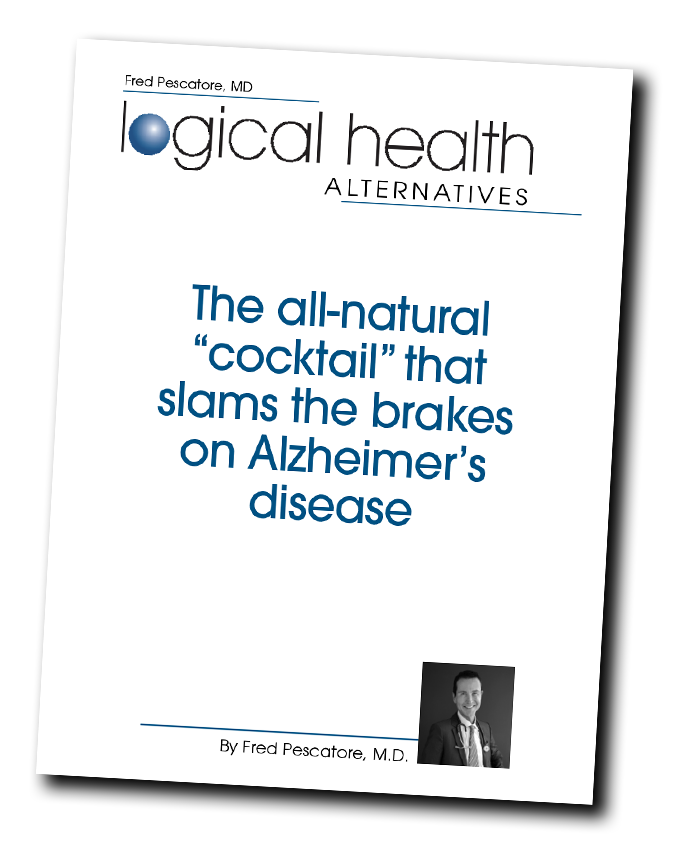
Sign up for Dr. Pescatore's Free E-Letter and receive this bonus report:
Reverse Alzheimer's!
The 30-cent, all-natural 'cocktail' that slams the brakes on Alzheimer's disease