

More than 15 years ago, I wrote The Allergy and Asthma Cure—and shortly after, Boost Your Health with Bacteria.
Both books centered on one core truth: Real relief from inflammatory conditions—including skin issues—starts in your gut.
Fast forward to 2025, and a new study is validating what I’ve been saying all along…
There’s a clear, undeniable link between gut health and skin conditions—especially rosacea.
The gut-skin axis is real
Rosacea is a frustrating skin condition that can cause redness, visible blood vessels, and sometimes fluid-filled bumps, typically on the face.
And for many people, conventional treatments either don’t work or come with a slew of side effects.
Even worse, some doctors still tell patients that their options are limited. That kind of thinking is not only lazy—it’s plain wrong.
And now, you don’t just have to take my word for it—the research is finally catching up.
In fact, researchers set out to explore how gut health, diet, and probiotics may influence the development and severity of rosacea. They pointed to growing evidence that gut dysbiosis (an imbalance of gut bacteria) can indeed contribute to chronic skin inflammation.
The researchers even identified something I talked about years ago, showing how gastrointestinal (GI) problems—like H. pylori infection, small intestinal bacterial overgrowth (SIBO), and inflammatory bowel diseases (like Crohn’s or ulcerative colitis)—are frequently linked to rosacea.
It’s called the gut-skin axis, and it’s exactly what it sounds like: a two-way street between your GI system and your skin.
That basically means if you can rebalance your gut, you have a fighting chance to “fix” your skin.
Your best defense to take back control
While we still don’t know exactly what causes rosacea, we do know that things like inflammation, immune dysfunction, and environmental triggers all play a role.
And clearly—your diet is a big part of that picture.
Foods that increase vasodilation (the widening of blood vessels), trigger histamine release, or disrupt the gut microbiome can all worsen rosacea.
And in my experience, common triggers are yeast-containing foods, sugar, simple carbohydrates, and fermented items. (For more details, order yourself a copy of my book.)
In addition, probiotics are an essential part of restoring gut balance. They reduce inflammatory cytokines, repair the gut lining, and strengthen your skin’s barrier.
For added support, topical probiotic soaps and lotions can be helpful for calming irritated, sensitive skin. As always, I encourage you to find high-quality products from a brand you trust. (I like Dr. Ohhira’s.)
So, if you’ve been struggling with rosacea—or any other chronic inflammatory skin condition—don’t wait for the mainstream to catch up.
Start a conversation with your doctor. Tell them what I’ve been saying for years: Healing your skin starts in the gut. And ask if they can help you map out a personalized nutrition plan.
Source:
“The Role of Gut Health in Rosacea: Diet, Probiotics, and the Microbiome.” Medscape, 05/29/2025. (medscape.com/viewarticle/role-gut-health-rosacea-diet-probiotics-and-microbiome-2025a1000e0l)
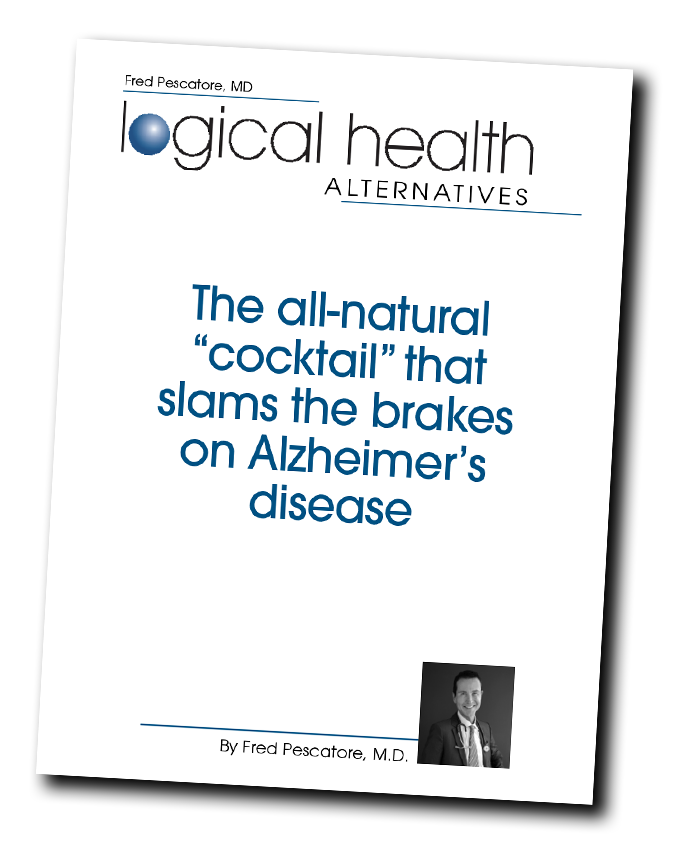
Sign up for Dr. Pescatore's Free E-Letter and receive this bonus report:
Reverse Alzheimer's!
The 30-cent, all-natural 'cocktail' that slams the brakes on Alzheimer's disease