

I’ve seen firsthand how changing our environment can transform health.
Decades ago, the waters around New York city were so polluted that fishing—or eating clams and mussels from those waters—would have been unthinkable.
Today, people do it all the time. Cleaner water and clearer skies have been a triumph for public health.
But don’t be fooled. The air we breathe is still one of the biggest threats to our brains.
In fact, research shows that 63 percent of the damage from fine air particles is tied to one of our most feared diagnoses…
Every breath you take
Researchers are drawing a connection between the air you breathe and your cognitive health.
Even scarier? The damage to your brain can begin long before symptoms appear.
In an analysis reported in JAMA Neurology, researchers linked fine particulate matter (PM2.5)—microscopic pollutants from car exhaust, industrial emissions, and even indoor sources like cooking—to an increased risk of Alzheimer’s disease (AD).
Researchers analyzed autopsy data from 602 people over 23 years. They looked at 10 different neuropathologic measures to distinguish abnormalities in brain tissue that may indicate AD, Lewy Body dementia, limbic-predominant age-related TDP-43 encephalopathy, and cerebrovascular disease.
Ultimately, they found that long-term exposure to tiny air particles was associated with more serious Alzheimer’s-related brain changes later in life.
In fact, 63 percent of the brains studied showed hallmarks of Alzheimer’s—like protein clumps and brain cell damage—used to measure AD severity.
While researchers can’t say for sure that these particles directly cause Alzheimer’s, we know they are tiny enough to pass from the lungs into the bloodstream, potentially triggering inflammation and oxidative stress in the brain.
Over time, this may accelerate the accumulation of amyloid-beta and tau proteins—two hallmarks of Alzheimer’s pathology.
But here’s the good news…
Offset the effects (and boost your brain)
According to the Lancet Commission, air pollution is one of 14 lifestyle or environmental factors that people can modify to help reduce their risk of dementia.
You can’t completely avoid air pollution—but you can take steps to minimize exposure and protect your brain.
Focus on these three tips:
- Track air quality daily: Limit outdoor activity when local PM2.5 levels are high.
- Improve your indoor environment: Use HEPA air purifiers, keep windows closed during high-pollution periods, and avoid indoor smoke.
- Strengthen your body’s defenses: Regular exercise, a diet rich in antioxidants, and quality sleep bolster the brain’s resilience against environmental stressors.
You might also consider adding B vitamins—like folic acid, B6, and B12—to your regimen to offset the effects of air pollution and boost your brain health.
It’s well known that B vitamins are crucial to brain function. Plus, environmental researchers at Columbia University suggest they could stop the inflammation and oxidative stress caused by exposure to fine PM air pollution.
In a small pilot study, participants taking B vitamins reversed some of the inflammatory effects of air pollution—like increased heart rate, white blood cell count, and lymphocytes.
I recommend 5 mg/day of folic acid, 100 mg/day of B6, and 1,000 mcg/day of B12. Or you can get all three of these from a high-quality B-complex supplement.
Sources:
“Alzheimer’s Disease Exacerbated by Air Pollution, Autopsy Study Suggests.” MedPage Today, 09/08/2025. (medpagetoday.com/neurology/alzheimersdisease/117365)
“B vitamins attenuate the epigenetic effects of ambient fine particles in a pilot human intervention trial.” PNAS, 2017. (doi.org/10.1073/pnas.1618545114)
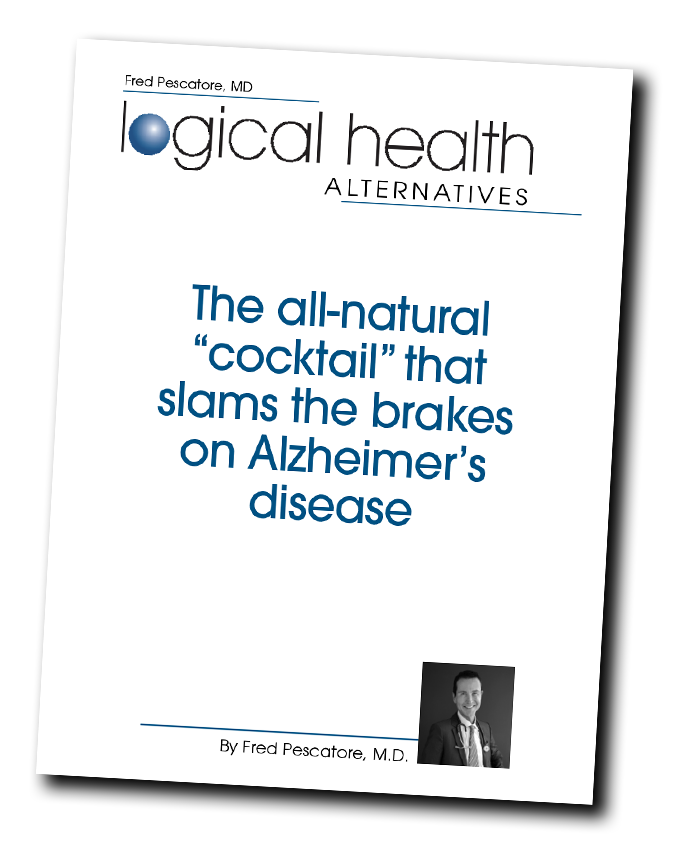
Sign up for Dr. Pescatore's Free E-Letter and receive this bonus report:
Reverse Alzheimer's!
The 30-cent, all-natural 'cocktail' that slams the brakes on Alzheimer's disease